Featured Articles
- 10 Surprising Ways Studying Abroad Enhances Your Emotional Intelligence and Resilience
- "7 Unconventional Skills You Gain During Study Abroad That Employers Will Love"
- "8 Unexpected Financial Tips for Making the Most of Your Study Abroad Experience Without Breaking the Bank"
- "Beyond Borders: How Virtual Reality is Transforming the Study Abroad Experience"
- Exploring the Rise of Virtual Study Abroad: Are Students Missing Out on Real-World Experiences?
Virtual Reality Campuses: The Future of Study Abroad or a Surreal Escape from Reality?
Virtual Reality Campuses: The Future of Study Abroad or a Surreal Escape from Reality?
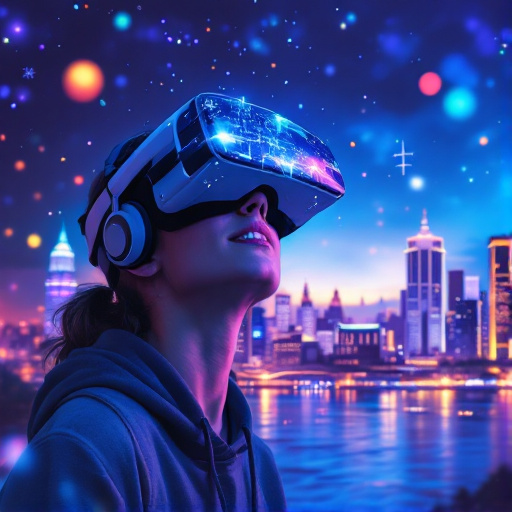
Virtual reality (VR) campuses are emerging as innovative alternatives to traditional study abroad experiences, blending education with immersive technology. With the potential to break geographical barriers, challenge social norms, and reshape the academic landscape, these virtual experiences raise the question: are they the future of study abroad, or simply a surreal escape from reality?
Understanding Virtual Reality Campuses
Virtual reality is a technology that simulates real-world environments through immersive computer-generated experiences. According to a report by Statista, the global virtual reality market is projected to reach $57.55 billion by 2027, showcasing its rapid integration into various sectors, including education. In the academic world, VR campuses allow students to engage with content, interact with peers, and experience learning environments in ways that transcend traditional learning formats.
A New Dimension of Learning
Imagine walking through the halls of the University of Cambridge or exploring the markets of Marrakech without ever leaving your hometown. A VR campus allows students to attend lectures, engage in group projects, and explore cultural landmarks—all while donning a headset. This innovative approach offers rich, interactive experiences that readings or videos often fail to replicate.
Case Study: Virtual Exchange Initiatives
One pioneering initiative is the "Virtual Exchange," which connects students from different cultural backgrounds through a digital platform. Programs like this have seen increased participation rates, with a notable study by the American Association of Colleges and Universities finding that 68% of students who participated felt more prepared for cross-cultural interactions. These exchanges exemplify how VR can enhance global awareness and empathy among young learners.
College Comfort: Benefits and Prospects
On the lighter side, some critics argue that spending too much time in a VR environment may lead to isolation or disillusionment with the real world—a sort of “Ready Player One” scenario. But let's be honest; who hasn’t fantasized about sitting in the sun on a picturesque beach in Bali while simultaneously completing a history essay? A virtual reality campus can offer just that: the comfort of home blended with the allure of global exploration.
Statistical Insights: Who's Using VR for Education?
Recent findings by the International Society for Technology in Education (ISTE) indicate that 60% of educators believe that VR has the potential to transform the classroom dramatically. This perspective highlights the growing acceptance of VR as an integral educational tool rather than a standalone novelty. In fact, various institutions are already incorporating VR into science, language learning, and even arts education, transforming how students learn and connect.
Counterarguments: Escapism and Authenticity
Yet, as we envision this brave new world, let’s examine a critical viewpoint. Some educators and students maintain that real-world experiences—like living in a foreign country, navigating its public transport, and interacting with locals—offer authenticity that virtual experiences simply can't match. This raises an essential question: Can VR replicate the serendipity of a chance encounter at a café in Florence or the tactile experience of handling foreign currency at a bustling market? One might argue that while virtual campuses can simulate cultural experiences, they cannot authentically replace them.
Student Perspectives
What do students think? In a survey conducted among high school students, over 75% expressed enthusiasm for attending college through a VR platform if it meant reducing the costs associated with travel and accommodation—two significant barriers to studying abroad. For many, the prospect of waliking the cobbled streets of Paris or attending a lecture remotely from the comfort of home seems appealing, especially in today’s economy where student debt continues to burden graduates.
Pursuing Flexibility
One of the most attractive features of VR campuses is the flexibility they offer. Remote learning, once seen as a temporary solution during the pandemic, has solidified its place in modern education. VR takes this a step further; students can access quality education anytime, anywhere, without the limitations of physical classroom availability. Think of the possibilities: international students can now join local classroom activities without the need for visas or travel funds!
A Humorously Honest Viewpoint
Now, let’s inject some humor. Imagine explaining to your non-tech-savvy relatives why you spent your semester "studying" in a dystopian cyberpunk version of Tokyo where you could fly and shoot lasers. They might ask if that counts as an actual degree! After all, it certainly beats real-life lectures on business calculus, right? With VR crafting its own realm of education, academia itself may soon be cloaked in a patchwork of colorful avatars and whimsical backgrounds.
Environmental Considerations
We often overlook the environmental impact of travel when discussing study abroad programs. According to research by the World Wildlife Fund, international travel contributes substantially to carbon emissions. Virtual reality campuses may present an eco-friendly solution by significantly reducing the carbon footprint associated with travel. By opting for VR exchanges, students can help protect the planet while still gaining invaluable experiences. Surely, even the most ardent advocates of international travel can appreciate that, right?
Preparing for the Future
As we move towards a tech-centric education landscape, integration of skills like virtual collaboration, global citizenship, and cultural literacy will be increasingly important. Universities adopting VR technology may find themselves leading the pack in preparing students for a workforce that will demand adaptability and technological proficiency. After all, could the skills acquired in a virtual space be the key to navigating our complex world?
Final Thoughts: Balancing Reality and Virtuality
As with many innovations, the answer lies in balance. While virtual reality campuses may provide a valuable complement to traditional education, nothing can genuinely replace the authenticity and richness of real-world experiences. However, if managed correctly, they can offer unprecedented access and opportunities for students across the globe.
The Road Ahead
So, what's the verdict? Virtual reality campuses hold potential, but they won't replace the traditional study abroad experience just yet. They serve as an exciting supplement, broadening access to education and connecting students in ways we have yet to fully explore. Therefore, as we continue to advance through the technological age, let’s embrace both worlds—real and virtual—as complementary tools in the journey of education.
In conclusion, as thrilling as a stroll through a virtual version of Florence may sound, let’s not forget the coffee, the history, and the unexpected turns that come with reality. The future of education lies not in choosing one over the other but in harmonizing both realms to craft a more inclusive approach to learning that welcomes every student—whether they choose to walk the streets of Barcelona or wander through the pixelated imagination of virtual campuses. The journey has just begun; buckle up, because the ride is surreal!
Related Articles