Featured Articles
- 10 Surprising Ways Studying Abroad Enhances Your Emotional Intelligence and Resilience
- "7 Unconventional Skills You Gain During Study Abroad That Employers Will Love"
- "8 Unexpected Financial Tips for Making the Most of Your Study Abroad Experience Without Breaking the Bank"
- "Beyond Borders: How Virtual Reality is Transforming the Study Abroad Experience"
- Exploring the Rise of Virtual Study Abroad: Are Students Missing Out on Real-World Experiences?
"Beyond Borders: How Virtual Reality is Transforming the Study Abroad Experience"
"Beyond Borders: How Virtual Reality is Transforming the Study Abroad Experience"
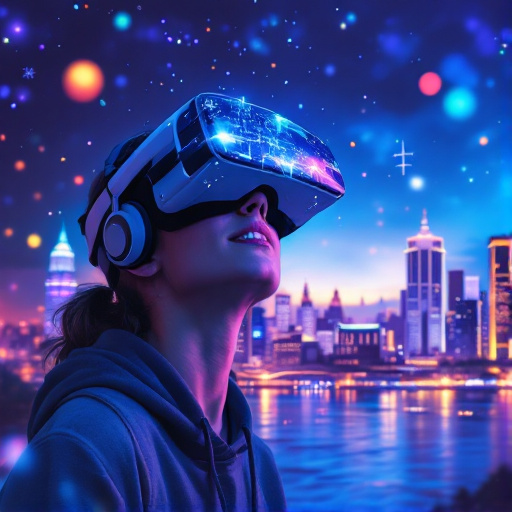
Virtual reality (VR) is reshaping the landscape of international education by immersively transporting students beyond geographical limits. This innovative technology is not only enhancing traditional study abroad programs but also democratizing access to global learning experiences.
Changing the Game: What is Virtual Reality?
Virtual reality is a simulated experience that can replicate or create a real-world environment. It can be used for various applications, from gaming to education—where it shines by allowing students to “travel” without ever leaving their homes. According to a report by Markets and Markets, the global VR market is expected to grow to $44.7 billion by 2024, with huge potential in the educational sector.
The Benefits of Virtual Reality in Education
So why is VR becoming a game-changer for those considering studying abroad? First and foremost, it opens doors for students who may not have the financial means, time, or ability to travel. A 2021 study by the Institute of International Education found that only about 10% of U.S. students study abroad. VR transforms that dynamic, offering immersive experiences at a fraction of the cost. Imagine walking the streets of Paris or wandering through the ruins of ancient Rome—all from your living room!
Empathy and Cultural Understanding
Beyond the immersive travel experience, VR also cultivates empathy and cultural understanding. Imagine putting on a VR headset and being transported to a bustling market in Marrakech. You can hear the vendors selling spices and see the vibrant fabrics. This allows students to not only see but feel the pulse of a different culture, enhancing their understanding and appreciation before they even step foot on foreign soil.
Case Study: The University of Southern California
A striking example of VR in education comes from the University of Southern California (USC), which has implemented a VR program where students can “visit” global cities. Students reported feeling more engaged and connected to the history and culture of the places they studied. According to Dr. David S. Cohen of USC, “Students who experienced our VR program had greater retention of cultural knowledge and displayed heightened intercultural communication skills.”
A Conversational Twist: Today’s Students and the New Tech
Frankly, today’s students are digital natives—a cohort that grew up with technology and are naturally inclined to embrace VR. They see it as a tool for exploration rather than just a gimmick. “It’s like, why travel 20 hours when I can just put on a headset?” ruminated Sarah, a 19-year-old college student considering European studies. This sentiment echoes across campuses, as younger generations find themselves more comfortable navigating digital landscapes than analog ones.
The Drawbacks: The VR Disconnect
While the benefits of virtual reality are many, it is essential to acknowledge the potential drawbacks. For one, VR cannot replace the deeply personal experiences obtained from interacting with people face-to-face or immersing oneself in the culture. Some educators express concern over potential disconnects. Dr. Lisa Tran, a sociologist at Harvard University, advised caution, stating, “While VR can enhance exposure to various cultures, it should never replace the richness of real-life experiences.”
Increasing Accessibility and Inclusivity
VR is championing inclusivity in education. Students with disabilities or those who face logistical barriers to international travel can now effectively participate in global learning experiences. For instance, the inclusion of VR in curriculums can offer students with mobility issues a taste of adventure they may have thought inaccessible. With this tech, suddenly exploring a museum or attending a lecture in London is feasible for everyone.
Bridging the Language Gap: Learning The Easy Way
Ever struggle with language barriers? Through VR, students can practice languages in contextually rich environments. Platforms like ImmerseMe let users engage in conversation with virtual characters in real-time, allowing them to practice their language skills without the anxiety of real-world interactions. This tech not only builds proficiency but also prepares students for the kinds of linguistic challenges they may face abroad.
Humor: The VR Faux Pas
However, not everything goes smoothly in the VR domain. Every tech-savvy student can tell a story of their own virtual hiccups. “The first time I used VR, I thought I was in Paris, but I ended up in a virtual cat café,” laughed Mark, a 21-year-old tech enthusiast. “I mean, sure, who doesn’t want to lounge with cats? But it’s not quite what I had in mind for my French language immersion.” This humorous anecdote captures the unpredictable nature of VR, reminding us that even technology isn’t immune to glitches.
Expanding Study Abroad Programs
As VR continues to advance, educational institutions are rethinking what study abroad looks like. Programs such as “Global Virtual Classrooms” have emerged, allowing students from different countries to collaborate on projects in real-time. Rather than just attending a physical class overseas, students can work alongside their global peers from the comfort of their homes, enriching their learning through diverse cultural perspectives.
Statistics That Speak
A study conducted by Penn State in 2022 revealed 78% of surveyed students believed that virtual reality made them more aware of cultural differences, and approximately 70% stated they would choose to participate in a VR program if it were available. With more institutions recognizing the potential of this technology, the future of education looks less expensive and more accessible.
The Future Is Bright
The world of education is undeniably changing, and VR is at the forefront of this revolution. As we march toward a future where physical travel may not always be possible, virtual platforms are paving the way for unparalleled educational opportunities. For students who have long dreamt of a global experience, VR is the proverbial passport, opening up new horizons.
Final Thoughts
In a rapidly globalizing world, the necessity for cultural awareness and understanding can't be overstated. Virtual reality offers a unique solution that can make global education accessible to all. While it may not entirely replace studying abroad, it allows for experiences that are enriching, educational, and engaging. It’s beyond borders and into the realm of possibilities, ensuring that no student misses out on the international education they crave.
Related Articles